

Swiss vs Japanese Watch Movements

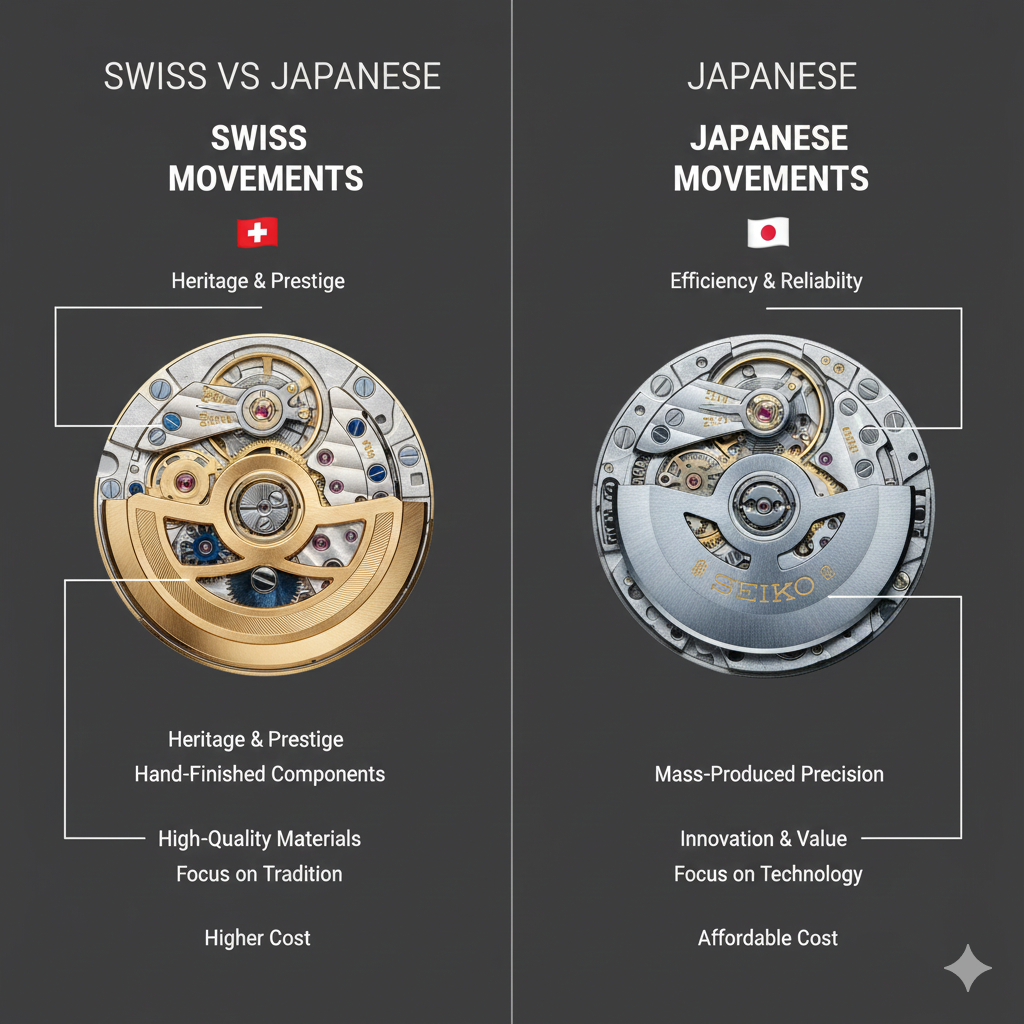
Swiss vs Japanese Watch Movements: What’s the Difference?20/22
When choosing a watch, one of the most common questions buyers ask is whether a Swiss or Japanese movement is better. Both have long histories, strong reputations, and loyal followings — but they serve slightly different philosophies of watchmaking.
Understanding the differences helps you choose a watch that fits your priorities, whether that’s craftsmanship, accuracy, affordability, or long-term reliability.
What Is a Watch Movement?
A movement is the internal mechanism that powers a watch and keeps time. Movements can be mechanical (automatic or manual) or quartz, and both Swiss and Japanese manufacturers produce all types.
The real difference lies in design philosophy, manufacturing approach, accuracy standards, and market positioning.
Overview: Swiss vs Japanese Movements
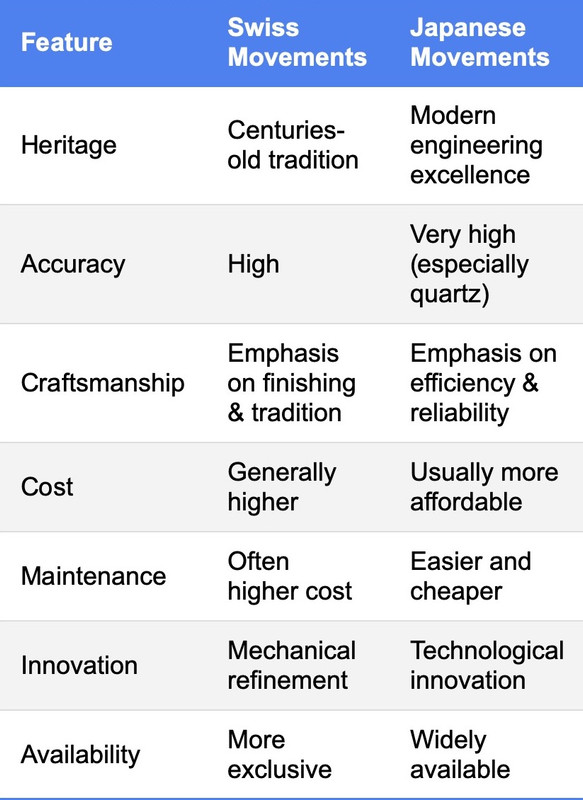
Swiss Watch Movements Explained
Swiss movements are often associated with traditional watchmaking, craftsmanship, and prestige.
Key Characteristics:
-
Long history of mechanical expertise
-
Strong focus on finishing and detail
-
Widely used in luxury and heritage brands
-
Higher production and labor standards
-
Often regulated to tighter tolerances
Common Swiss movement manufacturers include:
-
ETA
-
Sellita
-
Valjoux
-
In-house calibers from Swiss brands
Swiss Accuracy Standards
Many Swiss movements meet COSC chronometer certification, meaning they run within:
-
−4 to +6 seconds per day
This certification reflects precision but also adds cost.
Japanese Watch Movements Explained
Japanese movements are known for precision engineering, innovation, and exceptional reliability.
Key Characteristics:
-
Highly efficient manufacturing
-
Excellent accuracy
-
Strong value for money
-
Durable and low maintenance
-
Widely used across price ranges
Major Japanese movement makers include:
-
Seiko
-
Miyota (Citizen Group)
-
Orient
Japanese brands pioneered quartz technology and continue to lead in accuracy and durability.
Accuracy Comparison
Quartz Movements
-
Japanese quartz is widely considered among the most accurate in the world
-
Swiss quartz is also accurate but often priced higher due to branding and finishing
Typical accuracy:
-
Quartz: ±10–20 seconds per month
-
Mechanical: ±5–30 seconds per day
Mechanical Quality & Craftsmanship
Swiss Approach:
-
Focus on mechanical tradition
-
Decorative finishing (perlage, Geneva stripes)
-
High-end movement architecture
-
Emphasis on heritage and prestige
Japanese Approach:
-
Function-first engineering
-
Exceptional consistency
-
Highly efficient manufacturing
-
Strong long-term reliability
Neither approach is “better” — they simply reflect different philosophies.
Reliability & Durability
Japanese movements are often praised for their ability to run for years with minimal servicing. They are widely used in everyday and professional watches.
Swiss movements are also extremely reliable but may require more regular servicing due to tighter tolerances and complexity.
Service & Maintenance
|
Aspect |
Swiss |
Japanese |
|---|---|---|
|
Service cost |
Higher |
Lower |
|
Parts availability |
Good |
Excellent |
|
Service intervals |
4–6 years |
5–7 years |
|
Global support |
Strong |
Very strong |
Price Differences Explained
Swiss movements often cost more due to:
-
Higher labor costs
-
Stricter manufacturing standards
-
Brand heritage
-
Finishing and decoration
-
Marketing and certification
Japanese movements focus on efficiency and scale, which keeps prices competitive without sacrificing reliability.
Which One Should You Choose?
Choose a Swiss Movement if you:
-
Appreciate traditional watchmaking
-
Value finishing and heritage
-
Want a classic luxury feel
-
Prefer mechanical craftsmanship
Choose a Japanese Movement if you:
-
Want high reliability
-
Prefer accuracy and durability
-
Want better value
-
Appreciate modern engineering
The Truth: Both Are Excellent Choices
Swiss and Japanese movements represent two of the strongest traditions in watchmaking. Neither is objectively “better” — the right choice depends on what matters most to you.
Many collectors own both because they serve different purposes:
-
Swiss for craftsmanship and tradition
-
Japanese for reliability and everyday performance
Final Thoughts
Understanding the difference between Swiss and Japanese movements helps you make a smarter, more confident purchase. Rather than focusing on labels alone, consider how the watch fits your lifestyle, expectations, and budget.
At Watchstreet, we curate timepieces with both Swiss and Japanese movements, selecting models that meet our standards for authenticity, reliability, and long-term value — so you can choose with confidence.