

Common Watch Mistakes That Reduce Value

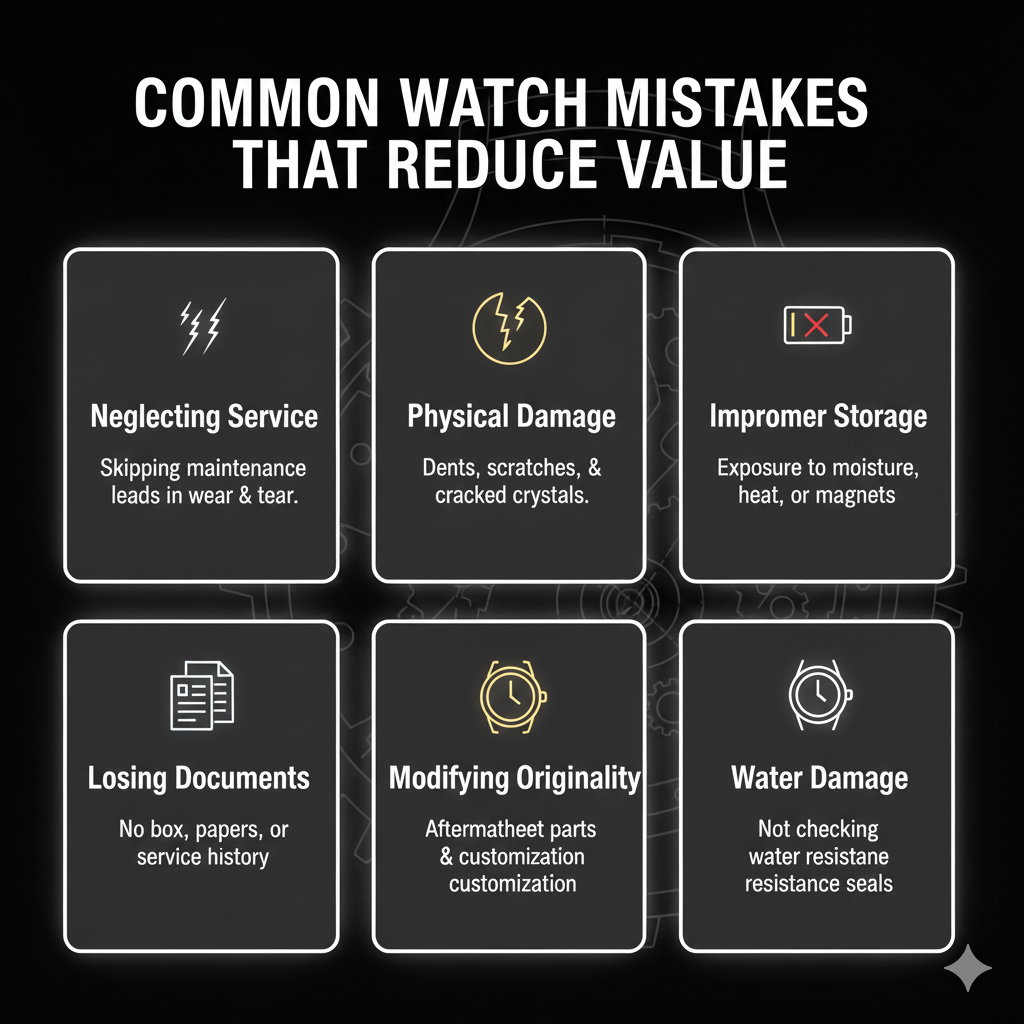
Common Watch Mistakes That Reduce Value (and How to Avoid Them)10/22
A fine watch is more than a way to tell time — it’s craftsmanship, heritage, and in many cases, a long-term asset. Yet many watch owners unknowingly make small mistakes that slowly reduce their watch’s value, condition, and desirability.
Whether you’re buying your first quality timepiece or building a long-term collection, understanding these mistakes can help you protect both your watch and your investment.
Below are the most common watch mistakes that quietly reduce value — and how to avoid them.
1. Discarding the Original Box and Papers
One of the biggest value killers is losing the original accessories.
A complete set usually includes:
Presentation box
Warranty card or booklet
Manuals and tags
Collectors strongly prefer “full set” watches because they help verify authenticity, ownership history, and originality. The same watch can be worth noticeably more when accompanied by its original documentation.
Best practice: Always store box and papers safely, even if you never plan to sell.
2. Over-Polishing the Case
While polishing can restore shine, excessive polishing permanently removes metal and softens the sharp edges that define a watch’s original design.
Over time, this can:
Alter case proportions
Remove factory finishing
Reduce collectability
Lower resale value
Light, professional refinishing is acceptable when necessary — but frequent polishing is one of the fastest ways to devalue a watch.
3. Replacing Original Parts with Aftermarket Components
Originality plays a major role in long-term value.
Using non-original parts such as:
Aftermarket dials
Replacement hands
Generic crowns
Non-original bracelets
can significantly reduce desirability. Even small mismatches matter to collectors.
Whenever parts must be replaced, genuine manufacturer components should always be used.
4. Skipping Regular Servicing
Mechanical watches rely on hundreds of moving parts working in harmony. Without routine servicing, internal oils dry out, friction increases, and components wear prematurely.
Recommended servicing:
Mechanical watches: every 4–6 years
Quartz watches: battery replacement before leakage occurs
Neglected maintenance can lead to costly repairs and permanent damage — both of which affect value.
5. Improper Storage Conditions
How you store your watch directly impacts its longevity.
Avoid:
High humidity
Extreme temperatures
Direct sunlight
Strong magnetic fields
Poor storage can cause corrosion, faded dials, gasket failure, and accuracy issues.
Tip: Store watches in a dry, temperature-stable environment, ideally in a protective case.
6. Wearing the Watch Outside Its Intended Use
Not all watches are built for the same purpose.
Common mistakes include:
Swimming with non-water-resistant watches
Pressing chronograph pushers underwater
Exposing leather straps to moisture
Using dress watches during sports or heavy activity
Using a watch beyond its designed limits can cause irreversible damage.
7. Making Permanent Modifications
Personal modifications may feel meaningful, but they usually hurt resale value.
Examples include:
Case engraving
Custom dials
Permanent aesthetic alterations
Once modified, a watch often becomes far less appealing to future buyers.
8. Failing to Verify Authenticity
Buying or trading without proper verification is one of the riskiest mistakes a collector can make.
Always ensure:
Matching serial and reference numbers
Correct movement for the model
Original components
Verified sourcing
Purchasing from trusted, curated sellers greatly reduces risk and protects long-term value.
9. Improper Cleaning Methods
Aggressive cleaning can cause more harm than good.
Avoid:
Harsh chemicals
Abrasive cloths
Ultrasonic cleaners on unserviced watches
Instead, use a soft microfiber cloth and gentle care methods designed for watches.
10. Treating a Watch as Disposable
Quality watches are designed to last decades — sometimes generations. Treating them as short-term fashion items often leads to neglect and unnecessary damage.
With proper care, even everyday watches can retain value and character over time.
Final Thoughts
Preserving a watch’s value comes down to respect, care, and informed ownership. Avoiding these common mistakes helps protect not only the financial value of your watch, but also its craftsmanship, history, and longevity.
At Watchstreet, every timepiece is carefully inspected and curated before listing, so you can buy with confidence knowing authenticity, condition, and long-term value come first.