

Automatic vs Quartz: Which Should You Choose?

Automatic vs Quartz: Which Should You Choose?8/22
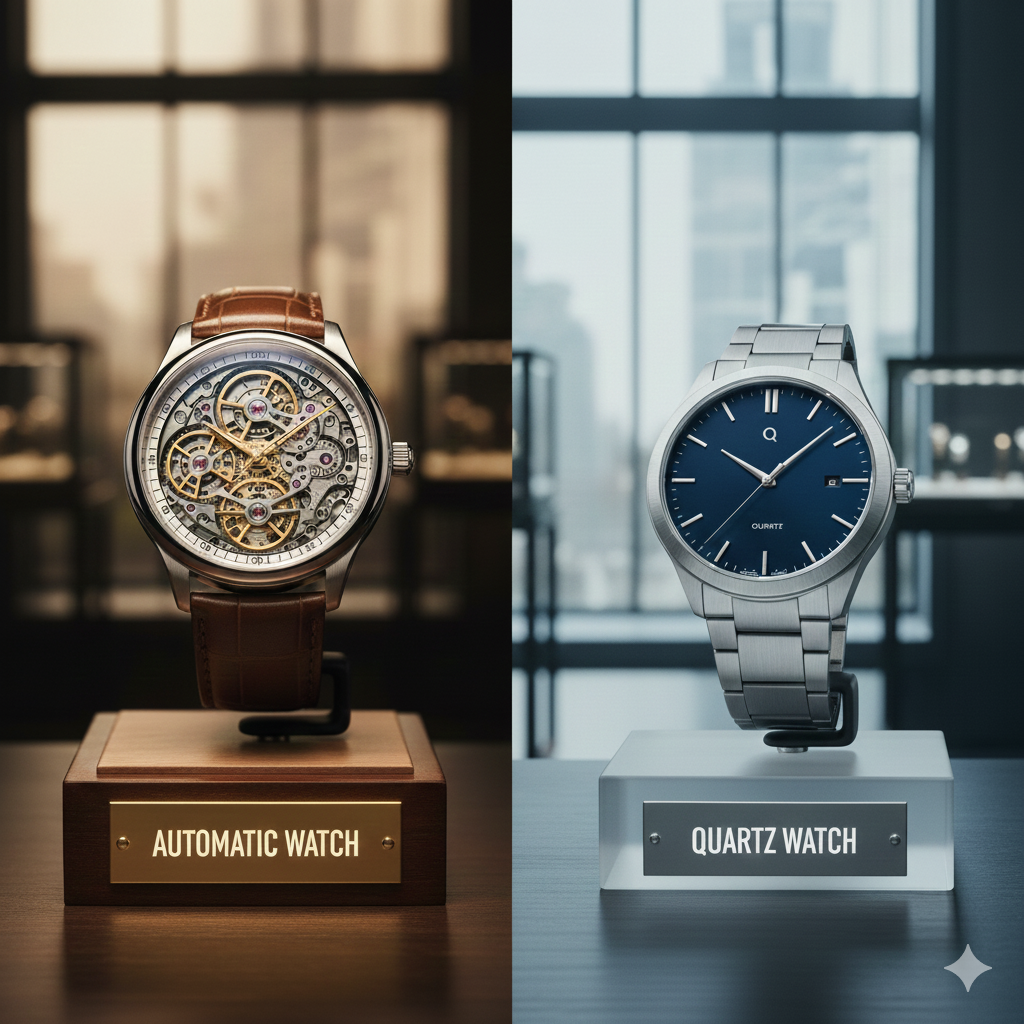
When buying a watch, one of the most important decisions you’ll face is choosing between an automatic or quartzmovement. While both serve the same purpose—telling time—they work in very different ways and appeal to different types of watch owners.
Understanding these differences will help you choose a watch that fits your lifestyle, preferences, and expectations. This guide breaks everything down clearly so you can make a confident, informed decision.
What Is an Automatic Watch?
An automatic watch (also called a self-winding watch) is powered by mechanical energy generated through the natural movement of your wrist. Inside the case, a small weighted rotor spins as you move, winding the mainspring that stores energy to power the watch.
Because of this mechanical design, automatic watches do not require batteries.
Key Features of Automatic Watches
-
Powered by wrist movement
-
No battery required
-
Mechanical craftsmanship with many moving parts
-
Smooth, sweeping seconds hand
-
Requires occasional servicing
-
Often positioned at a higher price point
Automatic watches are admired for their craftsmanship, heritage, and engineering complexity. Many collectors view them as the traditional expression of watchmaking, representing decades—or even centuries—of horological innovation.
What Is a Quartz Watch?
A quartz watch operates using a small battery that sends an electrical current through a quartz crystal. This crystal vibrates at a very precise frequency, regulating the movement of the hands with exceptional accuracy.
Quartz technology revolutionized the watch industry by making timekeeping more accurate, affordable, and accessible.
Key Features of Quartz Watches
-
Battery-powered
-
Extremely accurate timekeeping
-
Minimal maintenance required
-
Generally more affordable
-
Lightweight and dependable
-
Ideal for everyday wear
Because quartz movements are simple and efficient, they are widely used in both entry-level and luxury watches.
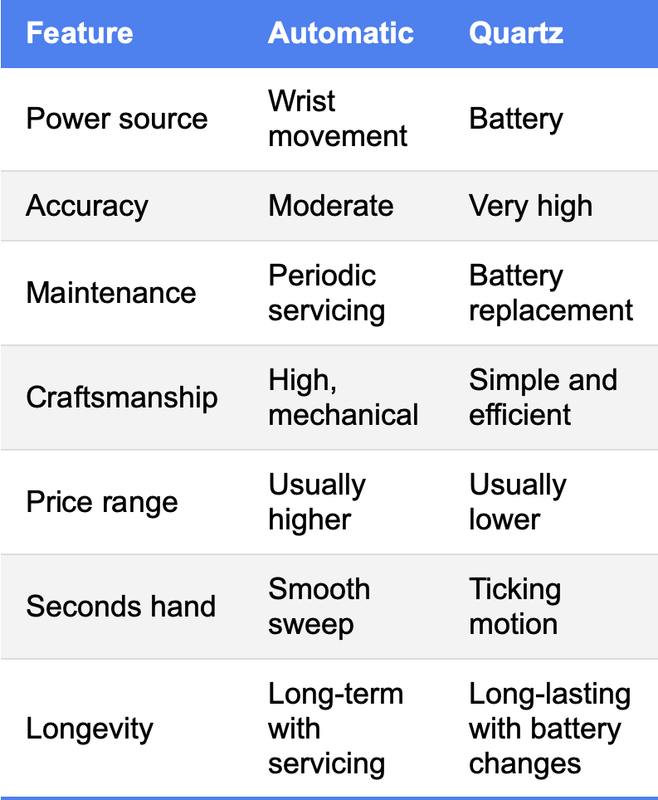
Automatic vs Quartz: Key Differences at a Glance
Which One Is Right for You?
Choosing between automatic and quartz depends on how you plan to wear your watch and what you value most.
Choose an Automatic Watch If You:
-
Appreciate traditional craftsmanship and mechanical engineering
-
Enjoy owning something with history and character
-
Wear your watch regularly
-
Value artistry and long-term collectability
-
Like the idea of a self-powered timepiece
Automatic watches offer emotional appeal, mechanical beauty, and a deeper connection to watchmaking traditions.
Choose a Quartz Watch If You:
-
Want high accuracy with minimal upkeep
-
Prefer a grab-and-go daily watch
-
Don’t want to worry about winding or power reserves
-
Want a more affordable option
-
Value reliability and convenience
Quartz watches are practical, dependable, and perfectly suited for modern lifestyles.
There Is No “Better” Choice — Only the Right One for You
Neither automatic nor quartz watches are objectively better. They serve different needs and preferences.
Many watch enthusiasts own both:
-
An automatic watch for special occasions or appreciation
-
A quartz watch for daily wear and convenience
This balance allows you to enjoy the strengths of each type.
Quality Matters More Than the Movement Type
Regardless of whether a watch is automatic or quartz, what truly matters is quality, authenticity, and proper sourcing. A well-made watch can last for years—sometimes decades—when properly cared for.
At Watchstreet, every timepiece is carefully selected and verified before being listed. This ensures that you receive a genuine, well-made watch that matches your lifestyle and expectations.
Final Thoughts
Choosing between automatic and quartz comes down to how you live, how often you wear your watch, and what you value most — tradition or convenience, craftsmanship or precision.
Whichever you choose, a thoughtfully selected watch becomes more than a tool for telling time. It becomes part of your personal style and daily rhythm.